
Contribution to FDI
Manufacturing is the largest and most dynamic contributor to foreign direct investment in ASEAN, underpinning the region’s role as a global production hub. Manufacturing accounted for 20% of total FDI inflows in 2024, up sharply from 9% in 2023, reflecting a strong surge in investment activity. This expansion aligns with broader regional trends highlighted in the ASEAN Investment Report, which notes that manufacturing, together with financial services, represents a dominant share of total inflows and drives industrial development.
Beyond its quantitative contribution, manufacturing serves as the backbone of ASEAN’s integration into global value chains. The sector supports key industries such as electronics, semiconductors, automotive, and textiles, which together account for a substantial portion of exports and employment. It also facilitates technology transfer, enhances productivity, and promotes industrial upgrading across Member States.
Moreover, manufacturing FDI has strong multiplier effects. It stimulates demand for logistics, infrastructure, and services, while also encouraging the development of supplier ecosystems and small and medium-sized enterprises (SMEs). Through these linkages, manufacturing not only contributes directly to FDI inflows but also strengthens the broader economic and investment landscape of ASEAN.
Current Trend
Current trends in manufacturing FDI in ASEAN demonstrate both strong growth and significant structural transformation. Manufacturing inflows surged notably in 2024, with increases observed across multiple Member States, including Cambodia (+56%), Malaysia (+99%), the Philippines (+64%), and Thailand (+35%), highlighting widespread investor confidence in the sector. This expansion is consistent with the ASEAN Investment Report, which emphasizes rising greenfield investment in supply chain–intensive industries.
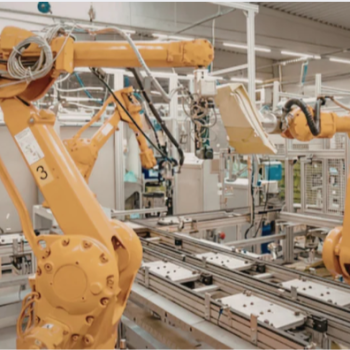
A key trend is the transition toward higher-value and technology-intensive production. Investment is increasingly focused on advanced manufacturing, including semiconductors, electronics, and electric vehicle supply chains. Multinational enterprises are not only expanding production capacity but also upgrading facilities to incorporate automation, robotics, and digital technologies. This shift reflects the growing importance of efficiency, resilience, and competitiveness in global supply chains.
Another notable trend is the diversification of investors. While traditional sources such as the United States and Europe remain important, investors from East Asia, particularly China, Japan, and the Republic of Korea, are playing an increasingly significant role. These firms are expanding their footprints and bringing extensive supplier networks, further deepening ASEAN’s integration into regional and global production systems.
Driving Factors
Several interconnected factors are driving manufacturing FDI in ASEAN. One of the most important is the restructuring of global supply chains. Geopolitical tensions, trade uncertainties, and rising production costs in traditional manufacturing locations have encouraged multinational enterprises to diversify production bases, with ASEAN emerging as a preferred destination.
Regional integration also plays a crucial role. Agreements such as RCEP and ASEAN trade frameworks facilitate cross-border production and reduce trade barriers, enabling firms to optimize regional production networks. These frameworks enhance market access and improve the business environment for investors.
Another key driver is ASEAN’s strong locational advantages. The region offers a combination of competitive labor costs, improving infrastructure, and access to major global markets. The presence of SEZs and industrial parks further enhances these advantages by fostering agglomeration effects and reducing operational costs.
Additionally, government policies and incentives are increasingly targeted toward priority manufacturing sectors. Initiatives in semiconductors, electric vehicles, and renewable energy across several Member States. These policies, combined with rising demand for advanced manufacturing and digital technologies, create a favorable environment for sustained investment in the sector.
Outlook
The outlook for manufacturing FDI in ASEAN remains robust, supported by strong fundamentals and a favorable investment environment. Despite global uncertainties, the region continues to attract significant investment due to its strategic position in global supply chains and its role as a leading destination for production diversification.
Future growth is expected to be driven by high-value sectors, including semiconductors, electric vehicles, and advanced manufacturing technologies. These industries are likely to benefit from continued technological innovation and rising global demand. The expansion of regional production networks will further strengthen ASEAN’s competitiveness and attract additional investment.
However, several challenges remain. ASEAN need to address infrastructure bottlenecks, improve logistics capacity, and enhance workforce skills. Without progress in these areas, ASEAN may face constraints in fully capturing emerging investment opportunities.
In the long term, ASEAN is expected to move further up the value chain, transitioning from labor-intensive to knowledge-based and technology-driven manufacturing. This shift will not only sustain FDI inflows but also enhance productivity and economic resilience. Overall, manufacturing is set to remain the cornerstone of ASEAN’s investment landscape and a key driver of future growth.